How do I know if I should replace my AC or repair it?
Repair if the unit is young and the problem is small. Replace if it is over 12 years old or repairs keep adding up.
Request an estimate for your new AC
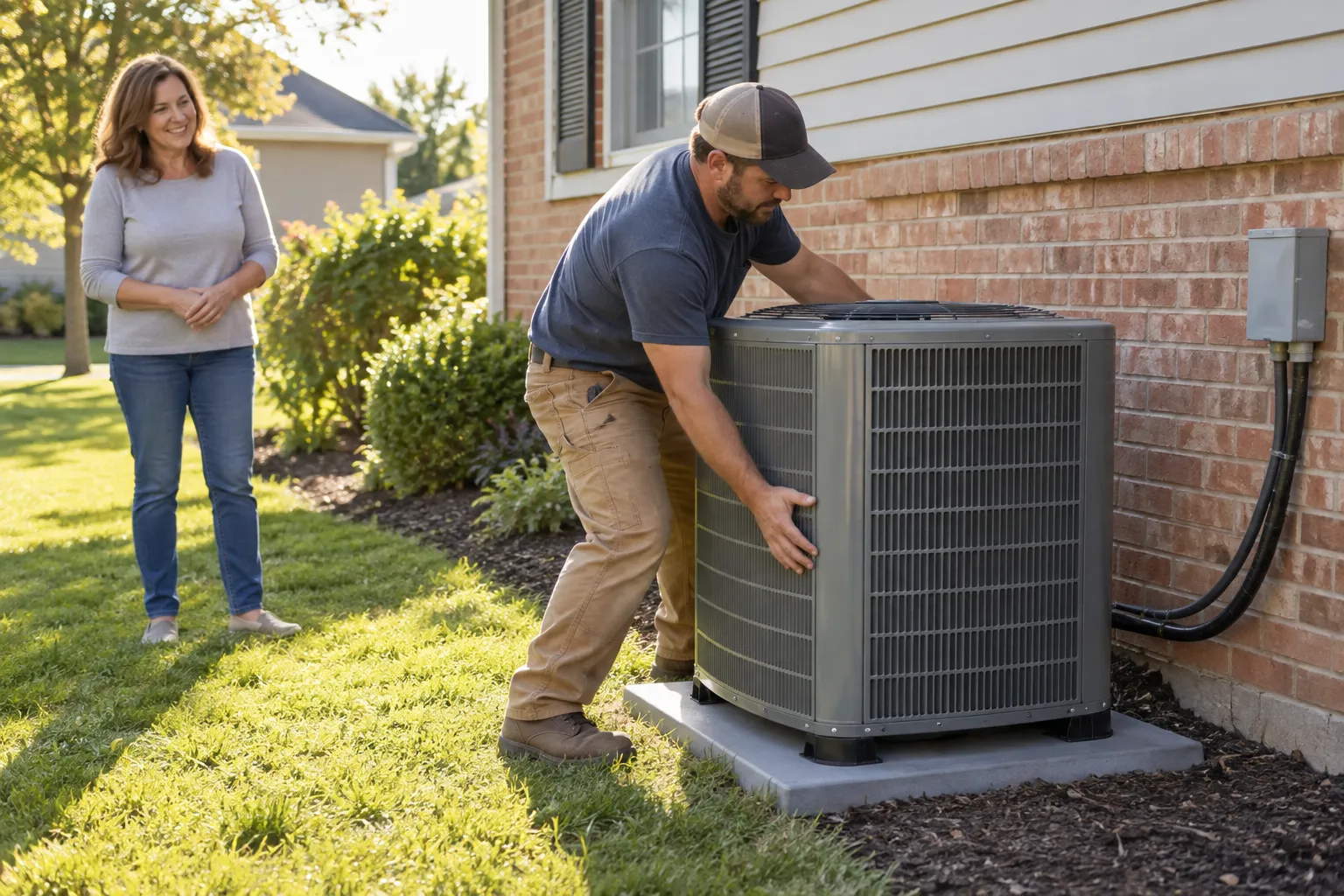
Is your AC worn out? Replace it. A unit that keeps failing costs more each summer, and it drags down comfort. A new system, installed correctly, cools evenly and runs cleaner. Buyers notice that when your home goes on the market.
Soundsinfo Heating & Air is a referral service. We do not install anything. You send a request, and we pass it to an independent provider in our network. The provider visits, checks your home, and gives you a written quote. You decide what happens next. There is no obligation. This page explains the signs, the options, the sizing, and the questions to ask before you say yes in Lancaster.
The short answer: if your AC is old, failing often, or leaking refrigerant, replace it. Then pick a provider who sizes the system properly. The reason is simple. A bad install costs you for years.
Repair when the unit is young and the fault is small. Replace when repairs keep stacking up. A rough rule: if a repair costs close to half the price of a new system, put that money toward a new one.
Age matters too. Most central AC units last about 12 to 15 years. Hot, humid summers wear them out sooner.
Watch for these:
Two or three of these? Get a quote.
A struggling AC does not fail politely. Here is how it tends to go.
First days: the unit runs longer. Bills rise. Humidity creeps up indoors.
First weeks: the house stays damp. Moisture settles in closets, on walls and around vents. Mold can start in that kind of air.
Full season: the compressor strains until it quits, often on the hottest week of the year. Then you are shopping in a rush, with fewer choices and less time to compare quotes.
The house remembers. Moisture damage and heat stress show up later in inspections.
Many homes here have slab foundations and attics that bake in summer. Ducts in those attics lose cooling fast. Humidity adds load on top of heat. A good provider checks the ducts, not just the box outside.
Storm season matters too. Power surges and flooding can damage outdoor units. If your unit took a hit, ask the provider about it. Some policies may cover sudden damage, so check your policy. Providers can often help document damage for a claim.
You have a few common choices:
The right choice depends on your ducts, your layout and your budget.
Bigger is not better. An oversized AC cools fast, shuts off, and leaves the air clammy. It also cycles on and off, which wears parts out.
An undersized unit runs nonstop and never catches up.
Ask the provider how they pick the size. A proper load calculation looks at square footage, windows, insulation, attic heat and sun exposure. A guess based on the old unit is not enough.
A full job usually covers:
Ask for permits to be handled where your area requires them. Unpermitted work can cause trouble at resale.
A new outdoor unit paired with an old indoor coil often underperforms. Mismatched parts can cut efficiency and shorten life. Ask whether the provider is replacing both sides, and whether the ducts need sealing or repair.
Look for the SEER rating. A higher number means less power used for the same cooling. In hot climates, that adds up over a long summer.
Higher efficiency costs more upfront. Ask the provider to show the yearly power difference, then decide. Also ask about rebates from your utility or the government, which vary by area.
Buyers and inspectors check the AC. A newer, properly installed system is a selling point. A patched-up old one is a negotiating chip against you.
Keep the paperwork. Warranty papers, permits and the written quote help prove the job was done right.
A clear provider answers plainly. If answers feel vague, get another quote.
The provider takes out the worn system and disposes of it, so your yard stays clear.
A load check picks the right capacity for your home, not a guess.
Outdoor unit, indoor coil, lines, wiring, drain and thermostat are connected and tested.
Providers can inspect ducts and airflow, since leaks waste cooling in hot attics.
Prices vary by home size, equipment and duct condition. These are typical U.S. ranges only. Ask every provider for a written quote that lists equipment and labor.
| Item | Typical range | Notes |
|---|---|---|
| Central AC replacement | $5,000 – $12,000 | Depends on size and efficiency |
| Heat pump system | $6,000 – $14,000 | Cools and heats |
| Ductless mini-split (single zone) | $3,000 – $7,000 | No ducts needed |
| Indoor coil replacement | $1,500 – $3,500 | Often paired with new outdoor unit |
| Duct repair or sealing | $500 – $2,500 | Varies with access and damage |
| Thermostat upgrade | $150 – $600 | Smart models cost more |
Use the form or Request a callback to check provider availability for your replacement.
A local provider looks at your layout, ducts and current system.
You receive options with equipment, labor and warranty details listed.
Pick the provider and plan the install. The provider does the work.
A correct install avoids repeat repairs and keeps the system running as designed.
Buyers and inspectors notice a newer, properly set up AC.
Providers in our network give written quotes, so you can compare.
Send a request, review the quote, and decide at your own pace.
Tell us what is wrong with your AC or furnace. Request an estimate and a local provider in our network will follow up.
No obligationRepair if the unit is young and the problem is small. Replace if it is over 12 years old or repairs keep adding up.
Many installs take a day, though ductwork changes or tricky layouts can take longer. The provider can give you a realistic schedule when they quote the job.
Usually not for age or wear. Some policies may cover sudden damage, like a storm or power surge, so check your policy. Providers can often help document damage.
Tell us what is wrong with your AC or furnace. Request an estimate and a local provider in our network will follow up.
No obligation