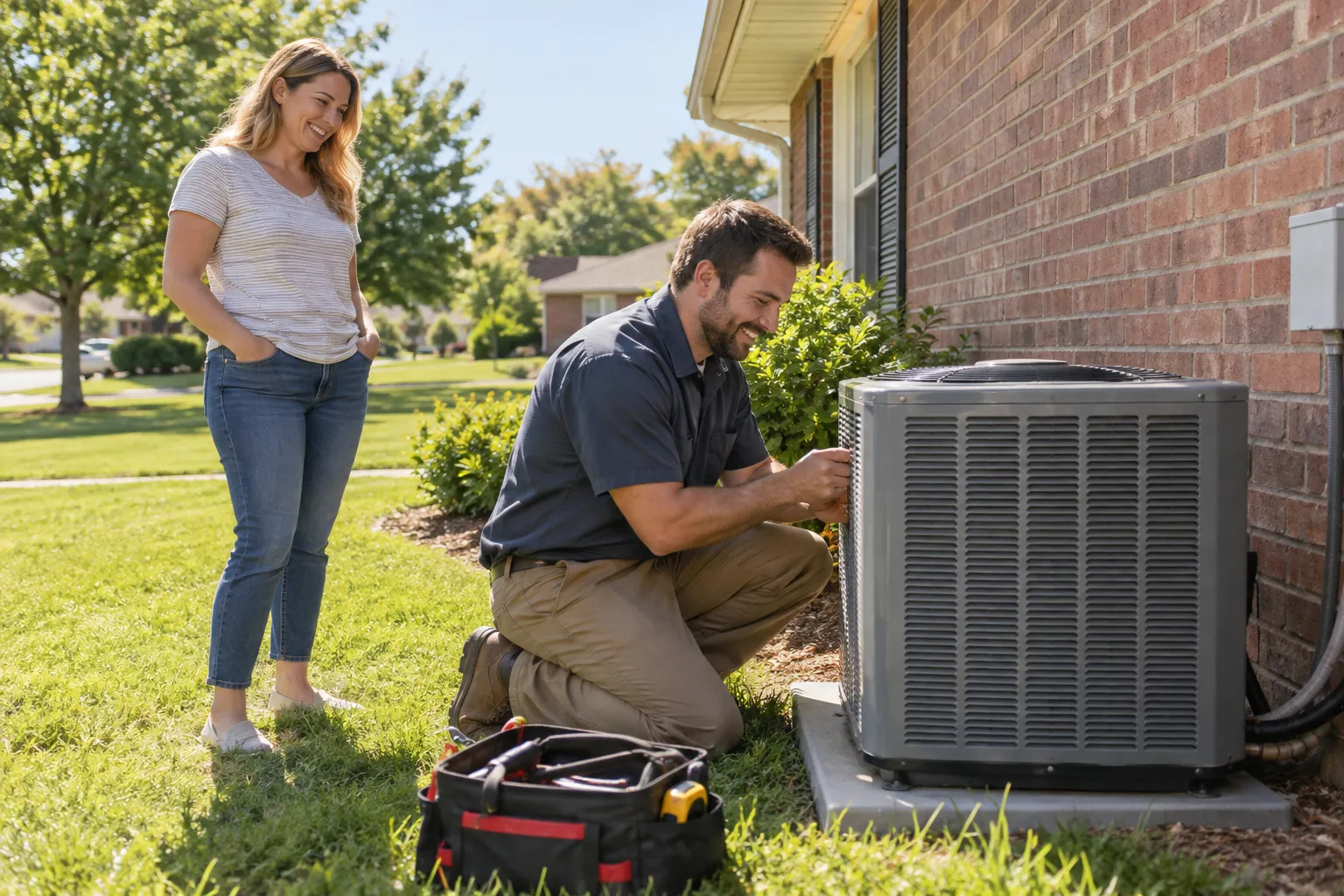
How fast should I act when my AC stops working?
Act the same hour you notice it. Here is why. In Lancaster summers, a house with a dead AC heats up fast, and attics push that heat down into the rooms. Humidity then settles in. After a day or two, damp air can lead to musty smells and mold-friendly surfaces. Request a callback to check provider availability. Many providers can respond quickly when you explain the problem clearly.
Is it safe to keep running a struggling AC or furnace?
Usually not. Answer first: stop it if you smell burning, hear grinding, or see water or sparks. Then the reason. A unit that strains can overheat parts, trip breakers, or leak. A small fault can turn into a larger repair. Turn the system off at the thermostat, and the breaker if needed. Then request an estimate from a local provider.
Will my homeowners insurance pay for HVAC repairs?
It depends on your policy. Some policies may cover sudden damage, such as a storm or power surge that harms a unit. Normal wear and age are often not covered. Check your policy and ask your insurer. Providers can often help document damage for a claim, with notes and photos. Keep every invoice and written quote. They help later, too.
What can I safely check myself before calling?
Keep it simple. Check that the thermostat has fresh batteries and the right mode. Look at the breaker. Swap a dirty air filter. Make sure vents are open and nothing blocks the outdoor unit. That is where DIY should end. Refrigerant, electrical parts, and gas lines need a trained provider. Guessing there can hurt you or the system.
Can I repair the refrigerant or gas parts on my own?
No. Refrigerant handling needs training and proper tools. Gas and high-voltage parts add real danger. A bad fix can also void a warranty and leave problems a buyer's inspector may flag. Fix it right the first time. Let a provider in our network handle it.
When is replacement smarter than repair?
Look at age, repair history, and energy bills. A unit past roughly 10 to 15 years that keeps failing is often a replacement candidate. Repeated repairs add up. A proper install also protects resale, since buyers notice a worn-out system. Ask the provider for written quotes on both options so you can compare.
What does a furnace problem look like in a mild climate?
It often hides. Winters here are mild, so a furnace may sit unused for months. Then the first cold snap arrives and it fails. Signs include odd smells, short cycling, or no heat at all. Do not wait for a hard freeze. Request an estimate early and avoid scrambling when cold hits.
How does Soundsinfo Heating & Air work, and who does the repair?
Soundsinfo Heating & Air is a referral service. You send a request, and we pass it to an independent local provider in the network. The provider does the work, sets the price, and gives you a written quote. There is no obligation to accept. Costs vary by job, so compare quotes before you decide.